Showing posts with label Friends of Korea. Show all posts

Wednesday, 26 November 2025

Stand by People’s Korea!

 
Dermot Hudson, Andy Brooks and Michael Chant
by New Worker correspondent

Solidarity campaigners returned to Brixton last weekend for a hybrid meeting which brought together leading members of the Friends of Korea committee in London and linked up with others around the country including a diplomat from the DPR Korea embassy. The latest in a series of occasional public meetings organised by the Co-ordinating Committee of Friends of Korea in Britain was chaired by NCP leader Andy Brooks and opened with contributions from Michael Chant of the RCPB (ML), Dermot Hudson of the Korean Friendship Association and Keith Bennett, the doyen of Korean solidarity work in the United Kingdom.
The DPRK and the Korean people have never wavered from defending their independence, their socialist system and their own path of development, as well as striving for peace in the face of imperialist intervention by US imperialism and its lackeys. The meeting discussed how, given the important geopolitical position of the country, People’s Korea has adopted a militant and resolute approach towards defending its socialist path and maintaining political power in the people’s hands. At the same time, the DPRK is making substantial progress in developing and consolidating its external relations.

Tuesday, 15 August 2023

The Korean War and its Relevance Today

 
A Friends of Korea committee seminar was held at the NCP Centre in London to commemorate the victory of the Korean people of US imperialism and its lackeys. Chaired by Andy Brooks the symposium heard papers from Michael Chant and Dermot Hudson video link contributions from Jong Gi Kim from the DPR Korea embassy in London. This is the contribution from Michael Chant, the secretary of the Friends of Korea Committee.

On July 27, 1953, the heroic forces of the Korean People’s Army and Chinese People’s Volunteer Army achieved victory in the Korean War by forcing the US imperialists and their allies to come north of the 38th parallel to sign the Armistice Agreement that ended the fighting in the Korean War. This was a victory not only for the Korean people, but for peace-loving humanity. The signing of the Armistice Agreement also signalled the first military defeat of the US following the Second World War — a humiliation which has haunted the US imperialists ever since, and for which it has yet to forgive the DPR Korea and the Korean people. From Britain, there were 81,084 men and women who served in the conflict, including 1,108 British servicemen who were killed in action. This is also a crime for which Britain must be held responsible.
    As we said in the invitation to participate in this seminar, on June 25, 1950, the US imperialists, under the aegis of the United Nations, had launched a brutal illegal war of aggression against the Korean nation. Since July 27, 1953, the US has done everything possible to maintain its military presence on the Korean Peninsula and keep the Korean War going. But the resistance of the DPRK continues, as the Korean people proudly demonstrate their mettle and build their own future.
    The Victory Day is not simply a celebration day for commemorating and looking back to a chapter of resistance in a previous era. The day also serves as a reminder that the US imperialists and their appeasers are stepping up war preparations in the Asia Pacific, and that the terrible tragedies visited upon the Korean people during the Korean War must never again be permitted. The significance of that war is taking on new meaning today as the US imperialists beat the drums of war to attempt to justify a nuclear catastrophe that threatens the very survival of the Korean people and the peoples of the world. But it further serves as a reminder that it is the people who are the makers of history and that they themselves must prevail against war.
    This year, on the 70th anniversary of July 27 1953, the people of the DPRK held activities to celebrate the victory, together with a delegation from the People’s Republic of China which took part in the events and a military delegation from the Russian Federation which also paid a congratulatory visit to the DPRK on the occasion.
    On July 25, leader Kim Jong Un had visited the Fatherland Liberation War Martyrs Cemetery, paying high tribute to the martyrs who defended the sovereignty and security of the country and people at great cost. Kim Jong Un said that they provided the precious ideological and moral heritage and tradition of victory as a steadfast cornerstone for the DPRK. He made the important point that the victory of July 27, 1953, is of significance to all humanity. This is the case since it inflicted such a disgraceful defeat on US imperialism, but also played its part in preventing a new world war at that time.
    On visiting the martyrs' cemetery of the Chinese People’s Volunteers, Kim Jong Un further elaborated on the significance of the DPRK’s victory in the war, saying that it was a hard fought just war not only to defend the dignity, honour and sovereignty of Korea and its people but also essential to defend world peace and security. It was, he said, an acute political and military confrontation with the imperialist forces which was waged on behalf of the peace-loving forces and progressive humankind. That great victory continues to show its vitality today.
    The US had intervened in Korea based on the reactionary Cold War policy of the “containment of communism”. From the Japanese colonial era through the Second World War, the outstanding resistance and guerrilla warfare carried out in Korea under the leadership of Kim Il Sung and other communists brought great prestige to communism throughout Korea for its ability to mobilise and organise the people to defend themselves.
    Even before the surrender of Japan, the US divided Korea by force at the 38th parallel with the aim of imposing their rule over the victorious Korean people who had contributed, second to none, to the Allied victory in the Second World War. The aim was to keep the Korean people divided and to turn the south of Korea into a US military beachhead in order to wage war against China and the Soviet Union.
Following the Japanese surrender, the US brutally suppressed and outlawed the Korean People’s Republic that had been proclaimed by the representatives of the whole Korean people on September 6 1945, in Seoul. The US installed the US Military Government of Korea in the south which carried out a campaign of terror against the Korean people’s resistance to US dictate and occupation. A virulent anti-communist, Syngman Rhee, who had spent most of his life in the US, was installed as the first President of the so-called Republic of Korea (ROK) in July 1948. The pro-US Rhee government continued to suppress the Korean people’s widespread resistance to US military occupation through extrajudicial killings, civilian massacres, mass incarcerations and other crimes, carried out with impunity.
    Meanwhile in the north, the Korean people, under the leadership of Kim Il Sung, were able to establish the Workers’ Party of Korea and found the DPRK in 1948. They took control of their future and began to build a modern socialist society on the basis of self-reliance. President Kim Il Sung and the Workers’ Party of Korea also provided political and practical leadership to the Korean people’s aspiration for a reunified Korea. It was following the ROK elections of May 29, 1950, when the Syngman Rhee government suffered a major electoral setback and the forces for reunification were gaining momentum, that the US launched the Korean War on June 25, 1950, to block the independent reunification of Korea.
    In the Korean War, the people of the DPRK, led by Kim Il Sung, were organised by the Workers’ Party of Korea and mobilised to support the Korean People’s Army. The newly established People’s Republic of China sent troops in the form of the Chinese People’s Volunteer Army to support the Korean people after US forces approached China’s eastern border with the DPRK. They ardently defended the Korean people in this war of aggression carried out by the US imperialists and 15 allied countries, including Britain, under the fig leaf of the UN flag.
    The armistice talks began on July 10, 1951. However, the US refused to agree to a ceasefire as a condition of talks and also refused to abide by the Geneva Convention regarding the repatriation of prisoners. During the two-year period of negotiations, the US and its allies employed all sorts of delaying tactics in the hope of achieving an outright military victory. They massacred hundreds of thousands of civilians in the north and south of Korea, with many buried alive, dismembered, burned to death or drowned. They carried out such war crimes as germ and chemical warfare, the bombing of infrastructure including dams and irrigation canals to flood the grain fields and starve the people, the carpet bombing of civilian targets, and the massive use of napalm — all to terrorise the Korean people into submission. An estimated 4.6 million Koreans, mostly civilians, perished during the war.
    However, a US victory was not to be. The Korean people, led by Kim Il Sung and the Korean People’s Army, with the help of the Chinese People’s Volunteer Army, defeated the troops of the US and the other aggressor nations. The US was forced to come to the north to sign the Armistice Agreement in Panmunjom. It was a bitter pill to swallow — being defeated for the first time in the 20th century and by a small Asian nation at that.
    In the spirit of revenge-seeking and stubbornly following its own geopolitical interests, the US has refused ever since to sign a peace treaty to end the Korean War, as stipulated by the terms of the Armistice Agreement, despite the repeated invitations by the DPRK to do so.
    Item 60, Article IV of the Armistice Agreement states: “In order to insure the peaceful settlement of the Korean question, the military Commanders of both sides hereby recommend to the governments of the countries concerned on both sides that, within three (3) months after the Armistice Agreement is signed and becomes effective, a political conference of a higher level of both sides be held by representatives appointed respectively to settle through negotiation the questions of the withdrawal of all foreign forces from Korea, the peaceful settlement of the Korean question, etc.”

ongoing imperialist aggression

Since July 27 1953, the US has done everything possible to maintain its military presence in Korea and keep the Korean War going. On October 1, 1953, it concluded the US-South Korea Mutual Defence Treaty, which has since become the basis of the continued US military presence in south Korea that is opposed by the vast majority of the Korean people. It is also the basis by which the US/south Korean forces carry out their Key Resolve/Foal Eagle and many other joint military exercises, which now include Britain, as well as Japan, Australia, and others, and are aimed at invading the DPRK and imposing regime change.
    The US continues to rebuff all attempts at normalising DPRK-US relations, including diplomatic resolutions to such issues as the DPRK’s use of nuclear energy and the development of its nuclear deterrent capability, while at the same time it maintains and expands its own nuclear weapons in the south. The US has also increased economic and political sanctions against the DPRK, another form of warfare, as it is doing against other countries that affirm their right to be and refuse to submit to US dictate. The Biden administration continues the disinformation about “human rights violations” in the DPRK in a feeble attempt to divert from its own human rights abuses at home and abroad.
    The British government for its part maintains its hostility to the DPRK, following the lead of the US. On the anniversary of the Armistice Agreement, it shamelessly referred to the US and British aggression as a “war for freedom”. Today the government also follows the US in promoting the so-called “rules-based international order”, in which it is not international law which prevails but “rules” which are made by and serve the interests of US imperialism. Britain also follows the US in terming its marauding in the Indo-Pacific region as “enhancing security”, which the government defines as “shifting greater resource to the region and developing nations’ ability to police and protect their waters”.
    The British government further shamelessly states: “Two Royal Navy Offshore Patrol Vessels are deployed to the Indo-Pacific on a permanent basis, and in their first year of operation succeeded in enforcing UN sanctions against North Korea, […]. The UK’s Carrier Strike Group will return to the Indo-Pacific in 2025, representing our commitment to exercise the best capabilities our Armed Forces have to offer alongside partners in the region.”
    However, as time goes on, the US imperialists and their allies are increasingly isolated in terms of relations with the DPRK. The DPRK’s principled stand in defence of its sovereignty and right to self-determination, and its consistent defence of the Korean nation’s honour continue to win the support of all humanity who can clearly see who is the aggressor on the Korean Peninsula.
    The aim of the US remains the same today as it was at the end of the Second World War — to occupy the entire Korean Peninsula as a launching pad for its takeover of Asia and then the world. And the US justification for doing so remains as bankrupt as ever. All the attempts of the US to realise its domination of the region — its occupation of the Korean Peninsula with almost 30,000 troops and its military bases, the ongoing attempts to sabotage the Korean people’s movement for national reunification, and its engineering of puppet regimes in the south — have failed to silence the resolve of the 70 million Koreans who are united in their aspiration for the peaceful, independent reunification of their homeland, free of US imperialist interference.

the anti-war movement

The criminal role of the US imperialists in Korea, from 1945 to the present, has been exposed for the whole world to see, and the resolute struggle of the Korean people for peace and justice, independence and reunification stands as an example for all the peoples of the world aspiring for peace. It is the task that Friends of Korea and all friendship organisations have taken up to tell the truth about the situation on the Korean Peninsula, and patiently explain the contribution that the DPRK is making to peace and stability to the region and its wider implications.
    The first demand of the Korean people and all peace- and justice-loving people around the world is that the US signs a peace treaty with the DPRK to replace the Armistice Agreement and end the Korean War. This would be a major step to stabilise the political situation on the Korean Peninsula and ease tensions. To date the US has violated all the terms of the Armistice Agreement since the time it was signed and has constantly rebuffed efforts by the DPRK to normalise relations between the two countries. The DPRK knows first-hand the perfidy and subterfuge of the US imperialists and refuses to participate in “empty talks” that do not advance peace on the Korean Peninsula.
    For the people in Britain, it is crucial that the demand be made that Britain make amends for its role in the crimes perpetrated against the Korean people during the Korean War. Further, Britain must immediately end its participation in the illegal naval embargo against the DPRK, which is part of the US-led sanctions regime and an act of war and a crime against the peace, the most serious war crime under international law. Friends of Korea will itself do its work to hold the US responsible for its crimes on the Korean Peninsula before, during and since the Korean War and demand that it sign a peace treaty with the DPRK to end the Korean War. For the people, this is a matter of contributing to making sure that another Korean War does not break out and providing every support to the Korean people’s drive to reunify their divided country. It is also a contribution to ensuring peace around the world.
    One of the crucial issues about which confusion is spread is that of the danger of nuclear war. Using the nuclear threat as an instrument of negotiations – agree with our terms or else – was a practice introduced by the US at the time of the criminal bombing of Hiroshima and Nagasaki on August 6 and 9, 1945. This practice was first heroically rejected by the Korean people in the 1950-1953 Korean War. Subsequently the heroic Vietnamese people did the same in the context of their War of National Liberation.
    The US, together with Britain, are intent on raising hysteria on the nuclear issue to a fever pitch in order to prevent humankind from thinking, from actually assessing the conditions and what these conditions reveal, and so prevent people uniting in favour of peace. The hysteria and disinformation is an attempt to block discussion on what can be done to turn things around in favour of the peoples. To open a path to progress and end the retrogression which the imperialists are pushing onto the peoples of the world, it is crucial to broaden discussions amongst ourselves so as to not permit the campaign of disinformation to be effective.
    The conditions given rise to after World War II ended with the collapse of the former Soviet Union. That ended the domination of two superpowers and an equilibrium between them based on nuclear deterrence. The so-called unipolar world which they tried to bring into being, with the US as self-declared indispensable nation, also no longer exists.
    The Korean War is an example of seeing where justice prevails. Furthermore, it can be seen that the present defensive measures being taken by the DPRK, far from being the threat to peace that is being claimed by the US, Britain and others, is a defence against the danger of war, a danger comes from the criminal striving of the US for world domination.
    The world that the people aspire to is in the grasp of the people’s forces working to make it happen. It can be said that fighting for an anti-war government at home will also be a contribution to ensuring peace on the Korean Peninsula and vice versa. Friends of Korea will certainly continue its work in favour of support and friendship with the DPRK. This is not a narrow aim, but is a component part of bringing into being a world where peace prevails, and countries can follow their path of independence, security and sovereignty without the interference of US imperialism, together with Britain and other big powers.

US Troops Out of Korea!
US Sign a Peace Treaty with the DPRK Now!
No to the Warmongering of Britain!
Unite in Favour of Peace and Independence!

Tuesday, 8 August 2023

For peace on the Korean peninsula

in the Sid French library
by New Worker correspondent

Korean solidarity campaigners met at the NCP’s Party Centre in London last weekend for a hybrid seminar to celebrate the victory of the Korean people over US imperialism and its lackeys in the Korean war and discuss the prospects for peace on the Korean peninsula and the way forward for the solidarity campaign in Britain.
    NCP leader Andy Brooks, who chaired the Friends of Korea (FoK) event, welcomed everyone to the meeting, at the Sid French library or by video link, to hear key-note openings from FoK secretary Michael Chant and Dermot Hudson of the Korean Friendship Association and an online contribution from Song Gi Kim from the Democratic Korean embassy in London. This was followed by contributions from everyone in the room and from many of the online participants across the country.
    The Korean war ended on 27th July 1953 with an armistice that promised free elections to end the partition of the Korean peninsula. But the Americans never kept their word and the country remains divided between the Democratic People’s Republic of Korea in the north and a puppet regime in the south that is propped up by tens of thousands of US troops and an American nuclear armada off the coast.
    The US has done everything possible to maintain its military presence on the Korean peninsula. But the resistance of the DPRK continues, as the Korean people proudly demonstrate their mettle and build their own future.
    Victory Day is not simply a celebration for commemorating and looking back to a chapter of resistance in a previous era. The day also serves as a reminder that the US imperialists and their lackeys are stepping up war preparations in the Asia Pacific rim, and that the terrible tragedies visited upon the Korean people during the Korean War must never again be permitted. The significance of that war is taking on new meaning today as the US imperialists beat the drums of war to attempt to justify a nuclear catastrophe that threatens the very survival of the Korean people and the peoples of the world. But it further serves as a reminder that it is the people who are the makers of history and that they themselves must prevail against war.


Saturday, 20 August 2022

Korea’s road to freedom (1)


by New Worker correspondent

Korean solidarity campaigners returned to the Sid French library at the NCP Party Centre last weekend for a seminar that focused on the 77th anniversary of the liberation of Korea and the outstanding achievements of the Korean communists who freed the country from Japanese colonialism and then went on to lead the people’s government that beat back the American invaders and their lackeys during the Korean war.
    NCP leader Andy Brooks, who chaired the Friends of Korea event, welcomed everyone to the meeting and then introduced the two main speakers – Michael Chant, the secretary of the Committee and Dermot Hudson, the Chair of the Korean Friendship Association.
    They both highlighted the immense achievements of the Workers Party of Korea over the past 70-odd years. Michael Chant stressed that the liberation of Korea on 15th August 1945 was not the gift of the Americans who claim that it was all down to their atomic bomb attacks on Hiroshima and Nagasaki but an act of the Korean people themselves who took up arms under the leadership of Kim Il Sung in the 1930s in the long march to end the brutal Japanese occupation.
    And as Dermot Hudson said “the defeat of Japanese imperialism, one of the main forces and shock brigade of international fascism , by the partisans of the Korean People's Revolutionary Army led by the great leader Kim Il Sung made a great contribution to the victory of the worldwide anti-fascist forces”. This sparked off a deeper look at Korean-style socialism.
    Kim Il Sung not only grasped Marxism-Leninism but he applied it to the concrete conditions of the Korean people. He knew that once the masses realised their own strength they would become unstoppable. He knew that serving the people was the be-all and end-all for Korean communists and for the Workers’ Party of Korea that he launched in 1945. He developed Korean-style socialism and the Juché idea – which elevates the philosophical principles of Marxism-Leninism as well as its economic theories and focuses on the development of each individual worker, who can only be truly free as part of the collective will of the masses.
    In the Western world Juché is often described as “self-reliance” but it is much more than that. Kim Il Sung said that working people could only become genuinely emancipated if they stood on their own feet. But the Juché idea doesn’t negate proletarian internationalism. The Soviet Union, People’s China and the people’s democracies of eastern Europe all closed ranks behind DPR Korea during the Korean war and likewise Democratic Korea has given concrete support to Egypt, Syria, Zimbabwe and many other Third World countries struggling against neo-colonialism.
    The seminar reviewed the achievements of the DPRK in building Korean-style socialism, demonstrating the incomparable advances since the liberation of Korea from Japanese colonial rule in 1945 and the founding of the Democratic People’s Republic of Korea on 9th September 1948. Following the foot-steps of Kim Il Sung and his successor Kim Jong Il the Workers Party of Korea with Kim Jong Un at the helm continues to defend the Korean people’s own path of development, striving for peace and for the reunification of the Korean Peninsula.

Friday, 12 November 2021

On the situation on the Korean peninsula

 by Dermot Hudson


a contribution made at a Friends of Korea seminar in London on Saturday 6th November 2021 

The subject of the situation in the Democratic People’s Republic of Korea and around the Korean peninsula is a big and comprehensive one . At the moment the imperialist mainstream media have tended to ‘take the DPRK out of the news ‘, not mentioning it much , although the hostile propaganda against the DPRK continues. Recently, the DPRK tested missiles which would have once led to hysterical headlines in the imperialist media for days on end but this time it did not do so . This is because the imperialists have experienced a policy failure on the Korean peninsula ; military pressure and threats have not worked, sanctions have not worked and engagement such as Trump’s ‘big deal ‘ have not worked.The imperialist media does not like to talk about failure only success.

The current situation on the Korean peninsula is distinguished by the rapid progress of the DPRK in all fields despite the sanctions and by the continuation of the hostile policies of the US under the Biden administration.

From the 1st November to the 5th November the US and south Korea staged aerial wargames involving F15 and F16 fighters . These wargames were not announced prior and did not have a title.

The DPRK has recently celebrated the 73rd anniversary of the foundation of the DPRK and the 76th anniversary of the foundation of the Workers Party of Korea . The 73rd anniversary of the foundation of the DPRK was marked by a splendid parade of the Worker- Peasant Red Guard and Ministry of Public Security of the DPRK including for the first time in a DPRK parade fire engines and also dogs .

Today the DPRK is the only country in the world or one of the few countries in the world that does not have a case of COVID-19.This is confirmed by the World Health Organisation . This is due to the strict anti -epidemic measures of the DPRK government .

Self-reliance works ; the DPRK has been able to shut its borders for 21 months and still survive. Some countries would not survive for a few days let alone nearly two years . At present the UK is suffering from some shortages which some say are due to Brexit. Self-reliance works we should be shouting from the rooftops .

Despite false reports by the BBC , the DPRK has reaped a bumper harvest . Respected Marshal Kim Jong Un sent a message of thanks to farmworkers who achieved a bumper harvest despite the flooding in August . KFA UK had a Facebook posting debunking the false report of the BBC.

The Korean people are working in the spirit of self-reliance to implement the decisions of the 8th Congress of the Workers Party of Korea which was held in January this year 

The key decisions of the Congress can be summarised as follows

  • Strengthening the independence of the economy

  • Tightening up the economic planning system

  • Improving people’s living standards

  • Implementing the people-orientated policy

  • Improving national defence

  • Combatting and eliminating anti-socialist and non -socialist practices

At the 8th Congress respected Marshal Kim Jong Un pointed out that “'The independent, planned and people-oriented characters of the national economy should be strengthened. To this end, it is necessary to raise the functions of the state that organizes economic affairs, and ensure unified management of products on the principle of making sure that the fruition of the economic activities is channelled into promoting the well-being of the people

This essentially defines the nature of the DPRK as an independent economy, a people orientated economy and a planned economy rather than a market economy . It basically rejects ‘reform ‘ and ‘opening up ‘ . People like NKNews and Andrei Lankov who have spent about 10 years trying to say that the DPRK is becoming capitalist etc . This is a new form of anti DPRK propaganda aimed at denying support for the DPRK among socialist and communists by falsely portraying it as the same as the capitalist countries , although this does echo the earlier ‘convergence theory ‘ of the imperialists and former Trotskyites like James Burnham .

We must take note that the Biden administration may avoid direct confrontation with the DPRK but instead opt for a non physical , ideological confrontation with the DPRK which would include a renewed human rights offensive against the DPRK plus pressure on the DPRK to ‘reform ‘ and ‘open up’ .

Among the people-orientated measures is housing construction including the construction of 10,000 new homes in Pyongyang and housing in rural areas . This will be given to people free of charge .

In Samjiyon city in the far north of the DPRK last month over 1,000 people moved to new homes . In Namdong ri , south Pyongyan Province 700 families moved into new homes .

At the 3rd Plenary meeting of the 8th Central Committee of the Workers Party of Korea the epochal decision was taken to supply , free of charge, dairy products to all nursery and kindergarten children , Previously they had supplied Soya Milk to all children . This was a decision of Chairman Kim Jong Il in the days of the Arduous March .It is a slander that children are malnourished in the DPRK .

Other achievements such as the creation of 2,000 hectares of new land and increases in production in many industries have been achieved . In September many units fulfilled their 3rd quarterly plans .

With regard to the question of policy towards the USA respected Marshal Kim Jong Un made a very important speech On the Orientation of Present Struggle for a Fresh Development of Socialist Construction at the 5th Session of the 14th Supreme People's Assembly of the DPRK on the 29th of September . He exposed the US fake peace offensive saying that “is no more than a petty trick for deceiving the international community and hiding its hostile acts and an extension of the hostile policy pursued by the successive U.S. administrations”.

He also called for the south Korean authorities to change their attitudes and at the same time called for the reopening of the inter-Korean communication lines . This was put into effect on the 4th of October.

Similarly comrade Kim Yo Jong , vice department director of the Central Committee of the Workers Party of Korea (WPK and a newly elected member of the State Affairs Commission of the DPRK in a statement on the 27th of September said that the DPRK was willing to enter into dialogue and negotiations with south Korea , even to hold a 6th inter -Korean summit and sign an end of war declaration. However the US and south Korea must end their double standards for this to happen .

Peace is On Our Bayonets ! The DPRK ‘s self defence potential has been further boosted.

On the 16th September 2021 a Rail borne missile was successfully launched, greatly improving the tactical mobility of the DPRK ‘s strategic force . The DPRK is one of the few countries to have rail borne missiles.

A hypersonic missile was tested on the 29th September . On the 1st October an anti-aircraft missile was tested and on the 20th October a new type of Submarine Launched Ballistic Missile was tested.

The National Defence Exhibition at the Three Revolutions Exhibition was opened in October.The opening was accompanied by a fly past of jets and helicopters , a sky driver and a martial arts display . Marshal Kim Jong Un made a keynote speech in which he said the DPRK ‘s weapons are not targeted against any country and they are a deterrent . He dismissed the idea that the US was not hostile .

So to conclude the US hostile policy continues and although the DPRK is not in the news we must continue to step up solidarity .KFA UK has played its part by holding many online meetings and taking the initiative of launching an online monthly journal ‘ People’s Korea Today ‘.


Taking a Stand in Support of the DPRK’s Right to Be

by Michael Chant

a contribution made at a Friends of Korea seminar in London on Saturday 6th November 2021 

Friends of Korea would once again like to emphasise the importance of taking a stand in support of the Democratic People’s Republic of Korea’s right to exist and choose its own path of development, striving for peace and for the reunification of the Korean Peninsula; and of supporting the just stands of the DPRK internationally at this crucial time in the face of hostility from the United States and other big powers, including Britain.

For us, the priority is to provide information, combat disinformation and defend the DPRK’s right to be and the right to of the people to decide their own future. We have that duty in Britain, and that is the programme of the Friends of Korea. Thus we hope this seminar today, with its speakers and participants, will contribute towards this aim.

The first thing to grasp is who is hostile to whom. The US and Britain make wild accusations against the DPRK but any sober assessment of the situation shows that the danger comes from the US and its allies. The US stresses its role as the “indispensable nation”, and lashes out to combat any challenge to this. The US has entered into several known military agreements to surround and threaten the DPRK, China and indeed all the peoples in the Asia Pacific region. Already the US stations tens of thousands of troops and war materiel and equipment in Japan, south Korea and several south Pacific islands. The US military regularly sends warships and planes to prowl the waters surrounding China and the Korean Peninsula to probe and test the defences of both countries. The US is refusing to permit a peaceful political settlement of any issue in the Asia Pacific region.

These are not only measures against the DPRK, China and the whole Asia Pacific region, but are in fact directed against the interests of the peoples everywhere, and all these hostile measures are an affront to all who take an anti-war stand. This is a stand that Friends of Korea firmly takes. In fact, the US maintains a large military presence of bases, troops and war equipment in south Korea that is used to intimidate and blockade the DPRK, as well of course as threatening China. This is also aimed at suppressing the people’s democratic movement in the south of the Korean Peninsula for the peaceful reunification of the Korean nation.

Of note in this context is the AUKUS military pact. AUKUS is a trilateral military pact announced on September 15 involving Australia, the United Kingdom and the United States. The pact includes war preparations to attack the DPRK and China, and an agreement for Australia to buy nuclear powered submarines from the US war economy. The three war partners are to co-operate in sending warships and planes throughout the Asia Pacific region and co-ordinate spying and cyber-activity directed at the DPRK, China and all peoples of the region. Britain recently ordered its Royal Navy/Royal Air Force Carrier Strike Group led by the new multi-billion dollar HMS Queen Elizabeth aircraft carrier to sail provocatively close to China through the Taiwan Straits on September 27, mirroring the US move in August.

Britain is also participating in the illegal sanctions the European Union has imposed against the DPRK, despite having withdrawn from the EU. It is doing so specifically with the “Democratic People's Republic of Korea (Sanctions) (EU Exit) Regulations”.

These hostile activities have constantly been addressed by the DPRK, and it is this that provides the aim of its defence and military capabilities. In the face of this hostility, the DPRK has waged its struggle for its right to be during the last 70 years and more in the face of US aggression, war and brutal sanctions. The principled stand of the DPRK is to uphold its sovereignty and dignity under all conditions.

The 8th Congress of the Workers' Party of Korea held in January addressed this question. The main thrust of the 8th Congress in this regard was that it reiterated the DPRK's determination to uphold its self-reliant Juche outlook, strengthen its independent economy to counter the brutal sanctions regime of the Anglo-Americans, and defend itself against threats and aggression from the US and others.

Noting in January that whoever became the US President, the real intentions of its policy toward the DPRK would never change, the report to the Congress stressed the need for an adroit strategy towards the US, at the same time as steadily expanding solidarity with the anti-imperialist, independent forces. The report also referred to the need to frustrate the reactionary offensive of the enemy and raise the prestige of the DPRK by enhancing the role of the external information sector. It stressed the need for the field of external work to further develop relations with the socialist countries, consolidate unity and co-operation with the revolutionary and progressive parties which aspire for independence, and for launching a dynamic joint struggle against imperialism on a worldwide scale so as to make the external environment of the DPRK ever-more favourable, it was reported.

The report expressed the steadfast determination of the WPK to reliably defend the peace and stability of the Korean Peninsula as well as of the rest of the world. There is no country on this planet, it said, which is permanently exposed to the threat of war as is the DPRK, nor a country as strong in its people's desire for peace. Friends of Korea is fully behind these affirmations and sentiments expressed in the WPK report.

More recently, on October 11, in his commemorative speech at the Defence Development Exhibition, respected leader Kim Jong Un noted that the exhibition was an opportunity to see how the defence capability of the DPRK had developed. The DPRK is holding fast to the principle of self-defence, and developing military science and the munitions industry in this context, especially over the past five years, he emphasised.

Kim Jong Un said: “The core of our Party's defence policy is to defend our country and people by our own efforts, and contain any threat and challenge. It is to reliably and steadfastly safeguard peace by means of a steadily-developing, powerful defence capability.”

He pointed out that historically the Korean nation had suffered invasion by foreign forces, and has had to build socialism under the constant threats by hostile forces. In view of this lesson of the history of the nation and the demand and special character of the Korean revolution, he said, the building up of national defence is an indispensable and vital state affair which the Workers’ Party of Korea, together with the DPRK government and people, must not neglect for even a moment.

The DPRK leader underlined that the rapid development of military techniques and hardware is changing the aspect of military operations and the security environment of states in every region of the present world. “The military danger facing our state due to the military tension prevailing around the Korean peninsula is different from that ten or five, nay, three years ago,” he said.

“Seeing the contents of various military exercises the United States and south Korea frequently wage on the pretext of coping with what they call threats while talking about peace, cooperation and prosperity in public and south Korea's attempt to modernise its armaments which has recently become intolerably undisguised,” he said, “we can easily guess how military environment will change in the region of the Korean peninsula tomorrow. Recently, south Korea has been trying to upgrade the fighting efficiency of its army under the powerful sponsorship of the United States, bringing in a large number of cutting-edge weapons of various kinds including stealth joint strike fighters and high altitude unmanned reconnaissance aircraft.”

In fact, as the speech explained, the south is focusing on modernising its strike weapons of different kinds. It is developing various warheads and extending the range of its missiles so as to upgrade its overall missile capacity. The military objective of these strike weapons is clear. It is the DPRK. The south is also working to develop the combat efficiency of its submarines and is developing fighter aircraft. “South Korea's attempt,” the speech said, “is too dangerous to be left to itself, but what is more dangerous is its justification for modernising its armaments and its hypocritical double-dealing attitude.”

What of relations between the DPRK and the Republic of Korea in this context? It can be said that whenever the Korean people have made headway in building inter-Korean relations and strengthening the movement for reunification, the US imperialists have intervened to sabotage these efforts. This remains the case.

The 8th Congress of the WPK had noted that in terms of its relations with the US, the DPRK has no illusions and will engage in relations on the basis of "goodwill for goodwill and power for power". The Congress had laid down that the DPRK will be developing and strengthening its international relations in support of the cause of peace and justice everywhere, extending a hand of friendship to all who reciprocate. As Kim Jong Un said at the Defence Development Exhibition, “Our arch-enemy is war itself, not south Korea, the United States or any other specific state or forces.”

In conclusion, it can be said that the DPRK conducts its foreign relations on the basis of principle and upholding its right to be. Contrary to the disinformation carried by the imperialist system of states that the DPRK is a violator of human rights, it is the draconian sanctions imposed by the US, Britain, and others that constitute gross human rights violations, acts of war and collective punishment against the people of the DPRK, which is doing its utmost to defend the rights of its people against this aggression.

The decisive factor in the future of Korea is the Korean people themselves, not anyone or any other power, and their drive for peace and reunification is bound to eventually succeed.

Finally, Friends of Korea would like to emphasise once again the importance of speaking out in defence of the DPRK and its right to be. This is crucial in the context of the continued attacks on it by the US imperialists and their allies including the British government.

We stand as one with the DPRK in its right to pursue its own path of social development, which they must be allowed to do without the threat of war, aggression, sanctions and interference of any kind. We have every confidence in the resilience of the DPRK and the justice of its cause. Friends of Korea will redouble its efforts in its work to embody the friendship and solidarity of democratic people in this country in support of the DPRK’s right to be. This is a matter of war and peace, with the DPRK contributing to the cause of peace on the Korean Peninsula, in the Asia Pacific region and internationally.


Saturday, 19 June 2021

Solidarity with the DPRK!


International Webinar Discusses Present Situation and Developments in DPRK


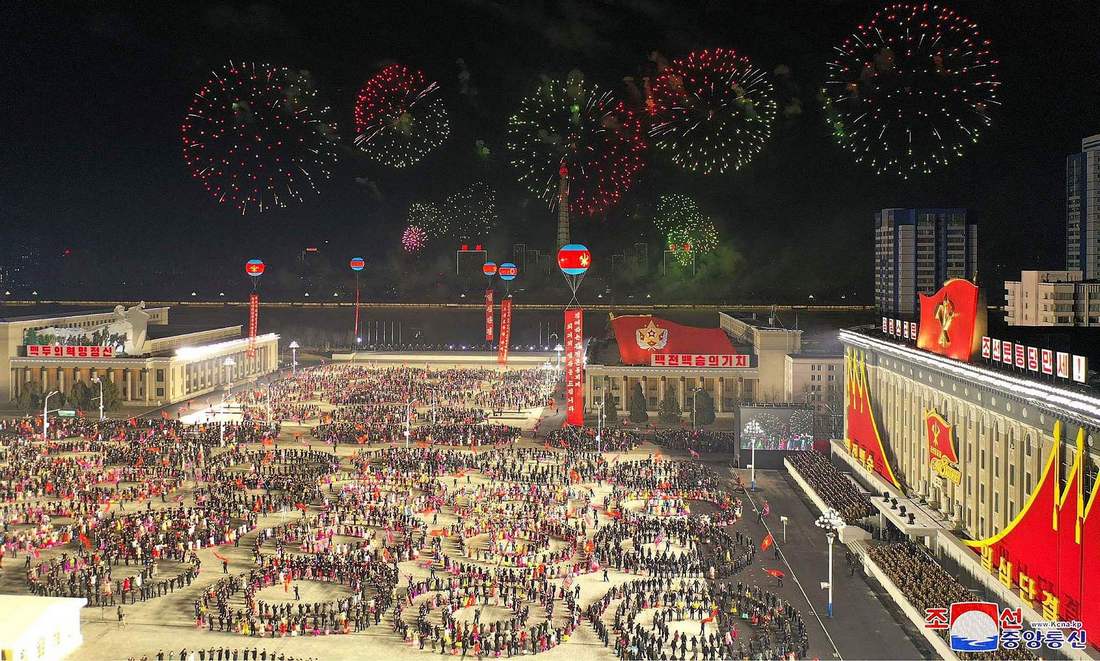
Celebration in Pyongyang of the successful conclusion of the 8th Congress of the Workers' Party of Korea in January 2021. 
  Thirty-eight  international Korean solidarity activists took part in a Friends of Korea video conference on 21stMay. The webinar heard contributions from the NCP, RCPB ML, the Korean Friendship Association and members of the Canadian Korean solidarity campaign as well as the national chair of the Socialist Labour Party on the present situation in the Democratic People's Republic of Korea in the light of the national and international contexts. This report was produced by Philip Fernandez of the Canadian chapter of the Korea Truth Commission


On May 21, the Friends of Korea (Britain) hosted a lively and informative webinar on the current situation in the Democratic People's Republic of Korea (DPRK) and the Korean Peninsula. Participants from Britain and Canada took part in the discussion which provided a chance to learn about and exchange views on the topic.

Andy Brooks, General Secretary of the New Communist Party of Britain and Chair of Friends of Korea (Britain), welcomed everyone and thanked them for joining in, especially those from Canada. He introduced Michael Chant, General Secretary of the Revolutionary Communist Party of Britain (Marxist-Leninist) and Secretary of Friends of Korea (Britain), who chaired the program. Chant set out the plan for the proceedings and introduced Lesley Larkum -- a composer, violinist and teacher -- who played the Korean folk song Arirang, the anthem of the Korean reunification movement, which everyone appreciated.

In the first presentation, Michael Chant provided a historical overview of the DPRK's struggle for its right to be during the last more than 70 years in the face of U.S. aggression, war and brutal sanctions. He highlighted the principled stand of the DPRK to uphold its sovereignty and dignity under all conditions and discussed recent developments in that country brought into focus by the decisions taken at the 8th Congress of the Workers' Party of Korea held in Pyongyang this past January. The main thrust of the 8th Congress, he noted, was that it reiterated the DPRK's determination to uphold its self-reliant Juche outlook, strengthen its independent economy to counter the brutal sanctions regime of the Anglo-Americans, and defend itself against threats and aggression from the U.S. and others. Britain is participating in the illegal sanctions the European Union has imposed against the DPRK, Chant pointed out, despite having withdrawn from the EU. He noted that in the current period, the DPRK will be developing and strengthening its international relations in support of the cause of peace and justice everywhere, extending a hand of friendship to all who reciprocate. Chant underscored that in terms of its relations with the U.S., the DPRK has no illusions and will engage in relations on the basis of "goodwill for goodwill and power for power."

The next speaker was Dermot Hudson, the Chair of the Korean Friendship Association in the UK. He informed participants of the Association's work to build people-to-people relations between the two countries to support the just stands of the DPRK in defence of peace on the Korean Peninsula and to oppose disinformation about the DPRK carried out by the monopoly media. One of the things Hudson noted, in light of the atrocities that Israel is committing against the Palestinians, is that the DPRK has always stood with the Palestinian people, rendering material and political support over many decades. He reminded participants that the meeting was being held on the 41st anniversary of the Gwangju Uprising when students and workers in that city rose up and held power for several days in May 1980 to defy the U.S.-backed Chun Doo Hwan military dictatorship in south Korea, and affirmed their right to democracy and empowerment. Hudson observed that May 21 too was the first day of the Moon-Biden meeting in Washington, DC and expressed doubt that anything good for the Korean people would come of it.

The last presenter was Philip Fernandez, spokesperson of the Korea Truth Commission (Canadian Chapter). He spoke of how the framework of the Biden administration's new DPRK policy, based on a pragmatic approach of "diplomacy and stern deterrence," is doomed to fail because the DPRK conducts its foreign relations on the basis of principle and upholding its right to be. Contrary to the disinformation carried by the imperialist system of states that the DPRK is a violator of human rights, Fernandez pointed out that it is the crippling sanctions imposed by the U.S, Canada, Britain and others that constitute gross human rights violations and collective punishment against the people of the DPRK, which is doing its utmost to defend the rights of its people against this aggression.

Fernandez mentioned, among other things, that whenever the Korean people have made headway in building inter-Korean relations and strengthening the movement for reunification, the U.S. imperialists have intervened to sabotage these efforts. In the context of next year's elections in south Korea, Fernandez noted that the U.S. is working behind the scenes to install the anti-communist People's Power Party in office. This is to undermine relations between north and south and push back the 2018 historic Panmunjom Declaration that raised the hopes of the whole Korean nation for the strengthening of inter-Korean relations. One of the sitting politicians of the People's Power Party in the legislature, Tae Yong-Ho, who defected from the DPRK Embassy in London in 2016, has now joined the anti-DPRK campaign to slander and isolate his birthplace, Fernandez noted. He pointed out that in a recent interview, Tae Yong-Ho called the DPRK a "slave state" while praising Britain as a land of "freedom, democracy and human rights."

The decisive factor in the future of Korea are the Korean people themselves, not anyone or any other power, and their drive for peace and reunification will eventually succeed, Fernandez underscored in concluding his presentation.

Following the presentations, Michael Chant informed participants that the DPRK's embassy in London had sent a message of greeting to the meeting and wished it success.

The discussion which ensued emphasized the importance of speaking out in defence of the DPRK and its right to be in the context of the continued attacks on it by the U.S. imperialists and their allies. There was strong sentiment to continue the fruitful discussion of this meeting.

The event concluded with a short video of a visit to a music school in Pyongyang in 2013 during the 60th anniversary celebrations of the Victory of the Fatherland Liberation War, followed by a clip of the playing of The Internationale at the close of the Workers' Party of Korea's 8th Congress.


Saturday, 14 December 2019

For peace in Korea!

Michael Chant speaking
By New Worker correspondent

Korean solidarity activists returned to the Marchmont Centre in central London last weekend to hear a Democratic Korean diplomat talk about the current situation on the Korean peninsula, at a joint meeting organised by the Korean Friendship Association (KFA) and the Friends of Korea committee.
     Chaired by NCP leader Andy Brooks, a panel of speakers including Michael Chant of the RCPB (ML), Dermot Hudson from the KFA and Kim Song Gi from the London embassy of the Democratic People’s Republic of Korea  (DPRK) spoke about a renewed Korean crisis following the failure of US imperialism to follow up commitments made at the 2018 summit between the US and DPRK leaders in Singapore and the follow-up summit in Vietnam earlier in the year.
Following the historic developments for peace and reunification on the Korean peninsula that took place in 2018, which showed the genuine desire of the DPRK and the Korean people to consign the hostility of the USA and the DPRK to history, the USA is still refusing to fulfil its commitments following the principle of action for action. The promise of the summits between President Trump and Democratic Korean leader Kim Jong Un is therefore not being fulfilled.
At a time when the 29 NATO partners are meeting in London to attempt to revitalise this aggressive alliance, and President Trump himself will be in Britain facing the opposition of the British people, it is vitally important to support the right of the Korean people to self-determination, independence and peace. The meeting called on all Korean solidarity campaigners to strengthen the solidarity of the people’s movements in Britain with the DPRK.

Tuesday, 27 November 2018

For peace in Korea


Andy Brooks opening the meeting

 by New Worker correspondent
Friends of Korea returned to the Marx Memorial Library last weekend for a solidarity meeting to discuss the current efforts for peace and reunification that have taken place on both sides of the divided peninsula since Korean leader Kim Jong Un’s historic talks with Donald Trump, the leader of US imperialism in Singapore in June.
            The meeting, called by the Friends of Korea committee, was opened by NCP leader Andy Brooks who welcomed everyone in the hallowed hall whose boards had, as he said, once been tread by Harry Quelch and Lenin.  Michael Chant from the RCPB (ML) followed with a talk that focused to the current efforts for peace by the people’s government in the north and the new southern administration and the need to raise the question of peace on the streets of Britain in this, the hundredth anniversary of the end of the first world war.
            This was followed by Dermot Hudson of the Korean Friendship Association (KFA) who spoke about his recent visit to Democratic Korea and the giant strides that the people’s government is taking at home and abroad for the cause of peace and socialism.
            The panel then took part in a wide-ranging discussion that covered all aspects of the campaign for peace in Korea in Britain and across world. The meeting ended with the adoption of a solidarity message to Korean leader Kim Jong Un and the people of the Democratic People’s Republic of Korea supporting the right of the Korean people to self-determination, independence and peace that was adopted by acclaim.
The Friends of Korea committee consists of the New Communist Party of Britain, Revolutionary Communist Party of Britain (ML), Socialist Labour Party, European Regional Society for the Study of the Juché Idea and the UK Korean Friendship Association. Meetings are open to all friends of the Korean revolution and the committee organises events throughout the year which are listed by the supporting movements and on the Friends of Korea blog.