Showing posts with label SLP. Show all posts

Friday, 12 November 2021

For peace on the Korean peninsula

 by New Worker correspondent

Korean solidarity campaigners met at the NCP’s Party Centre in London last weekend for a seminar to discuss the prospects for peace on the Korean peninsula and the way forward for the solidarity campaign in Britain.
    NCP leader Andy Brooks, who chaired the Friends of Korea event, welcomed everyone to the meeting which was the first public event at the Centre since the lockdowns began in 2020. Most of them had visited Democratic Korea and all were supporters of the Friends of Korea committee that has been campaigning for the peaceful re-unification of the Korean peninsula for over 20 years.
    This was stressed by Michael Chant, the secretary of the Committee, who emphasised the importance of taking a stand in support of the Democratic People’s Republic of Korea’s right to exist and choose its own path of development, striving for peace and for the reunification of the Korean peninsula, and, as he said, “supporting the just stands of the DPRK internationally at this crucial time in the face of hostility from the United States and other big powers, including Britain”.
    Though the imperialists have toned down their hate campaign their hostility still remains. “At the moment the imperialist mainstream media have tended to take the DPRK out of the news “ Dermot Hudson from the Korean Friendship Association said “although the hostile propaganda against the DPRK continues. Recently , the DPRK tested missiles which would have once led to hysterical headlines in the imperialist media for days on end. But this time it did not do so . This is because the imperialists have experienced a policy failure on the Korean peninsula ; military pressure and threats have not worked, sanctions have not worked and engagement such as Trump’s ‘big deal ‘ have not worked. The imperialist media does not like to talk about failure only success”.
    Others shared their own views on the Korean issue including Keith Bennett, a veteran Korean solidarity campaigner, who helped draw up the Friends of Korea founding statement many years ago and everyone agreed on the need to redouble our efforts in the coming year.
    The Co-ordinating Committee of the Friends of Korea is an umbrella organisation which brings together all the major movements active in Korean friendship and solidarity work in Britain today. It includes the NCP and the RCPB (ML), the Socialist Labour Party and the Korean Friendship Association. The Committee is chaired by Andy Brooks and the secretary is Michael Chant. The committee organises meetings throughout the year, which are publicised by the supporting movements and on the Friends of Korea blog.

Saturday, 19 June 2021

Solidarity with the DPRK!


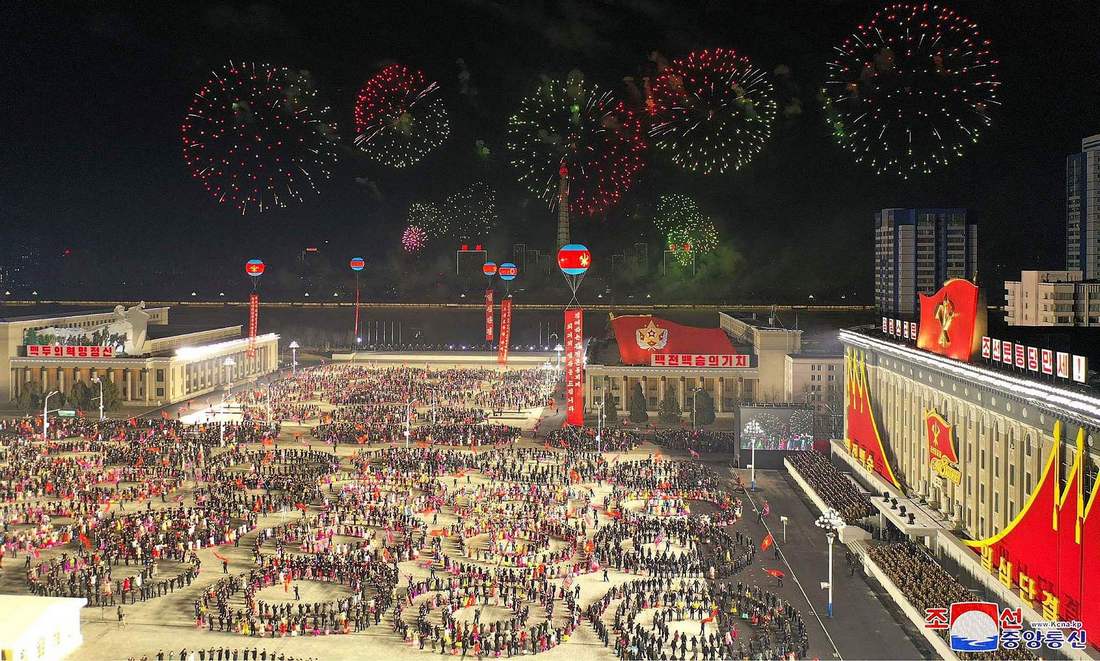
International Webinar Discusses Present Situation and Developments in DPRK


Celebration in Pyongyang of the successful conclusion of the 8th Congress of the Workers' Party of Korea in January 2021. 
  Thirty-eight  international Korean solidarity activists took part in a Friends of Korea video conference on 21stMay. The webinar heard contributions from the NCP, RCPB ML, the Korean Friendship Association and members of the Canadian Korean solidarity campaign as well as the national chair of the Socialist Labour Party on the present situation in the Democratic People's Republic of Korea in the light of the national and international contexts. This report was produced by Philip Fernandez of the Canadian chapter of the Korea Truth Commission


On May 21, the Friends of Korea (Britain) hosted a lively and informative webinar on the current situation in the Democratic People's Republic of Korea (DPRK) and the Korean Peninsula. Participants from Britain and Canada took part in the discussion which provided a chance to learn about and exchange views on the topic.

Andy Brooks, General Secretary of the New Communist Party of Britain and Chair of Friends of Korea (Britain), welcomed everyone and thanked them for joining in, especially those from Canada. He introduced Michael Chant, General Secretary of the Revolutionary Communist Party of Britain (Marxist-Leninist) and Secretary of Friends of Korea (Britain), who chaired the program. Chant set out the plan for the proceedings and introduced Lesley Larkum -- a composer, violinist and teacher -- who played the Korean folk song Arirang, the anthem of the Korean reunification movement, which everyone appreciated.

In the first presentation, Michael Chant provided a historical overview of the DPRK's struggle for its right to be during the last more than 70 years in the face of U.S. aggression, war and brutal sanctions. He highlighted the principled stand of the DPRK to uphold its sovereignty and dignity under all conditions and discussed recent developments in that country brought into focus by the decisions taken at the 8th Congress of the Workers' Party of Korea held in Pyongyang this past January. The main thrust of the 8th Congress, he noted, was that it reiterated the DPRK's determination to uphold its self-reliant Juche outlook, strengthen its independent economy to counter the brutal sanctions regime of the Anglo-Americans, and defend itself against threats and aggression from the U.S. and others. Britain is participating in the illegal sanctions the European Union has imposed against the DPRK, Chant pointed out, despite having withdrawn from the EU. He noted that in the current period, the DPRK will be developing and strengthening its international relations in support of the cause of peace and justice everywhere, extending a hand of friendship to all who reciprocate. Chant underscored that in terms of its relations with the U.S., the DPRK has no illusions and will engage in relations on the basis of "goodwill for goodwill and power for power."

The next speaker was Dermot Hudson, the Chair of the Korean Friendship Association in the UK. He informed participants of the Association's work to build people-to-people relations between the two countries to support the just stands of the DPRK in defence of peace on the Korean Peninsula and to oppose disinformation about the DPRK carried out by the monopoly media. One of the things Hudson noted, in light of the atrocities that Israel is committing against the Palestinians, is that the DPRK has always stood with the Palestinian people, rendering material and political support over many decades. He reminded participants that the meeting was being held on the 41st anniversary of the Gwangju Uprising when students and workers in that city rose up and held power for several days in May 1980 to defy the U.S.-backed Chun Doo Hwan military dictatorship in south Korea, and affirmed their right to democracy and empowerment. Hudson observed that May 21 too was the first day of the Moon-Biden meeting in Washington, DC and expressed doubt that anything good for the Korean people would come of it.

The last presenter was Philip Fernandez, spokesperson of the Korea Truth Commission (Canadian Chapter). He spoke of how the framework of the Biden administration's new DPRK policy, based on a pragmatic approach of "diplomacy and stern deterrence," is doomed to fail because the DPRK conducts its foreign relations on the basis of principle and upholding its right to be. Contrary to the disinformation carried by the imperialist system of states that the DPRK is a violator of human rights, Fernandez pointed out that it is the crippling sanctions imposed by the U.S, Canada, Britain and others that constitute gross human rights violations and collective punishment against the people of the DPRK, which is doing its utmost to defend the rights of its people against this aggression.

Fernandez mentioned, among other things, that whenever the Korean people have made headway in building inter-Korean relations and strengthening the movement for reunification, the U.S. imperialists have intervened to sabotage these efforts. In the context of next year's elections in south Korea, Fernandez noted that the U.S. is working behind the scenes to install the anti-communist People's Power Party in office. This is to undermine relations between north and south and push back the 2018 historic Panmunjom Declaration that raised the hopes of the whole Korean nation for the strengthening of inter-Korean relations. One of the sitting politicians of the People's Power Party in the legislature, Tae Yong-Ho, who defected from the DPRK Embassy in London in 2016, has now joined the anti-DPRK campaign to slander and isolate his birthplace, Fernandez noted. He pointed out that in a recent interview, Tae Yong-Ho called the DPRK a "slave state" while praising Britain as a land of "freedom, democracy and human rights."

The decisive factor in the future of Korea are the Korean people themselves, not anyone or any other power, and their drive for peace and reunification will eventually succeed, Fernandez underscored in concluding his presentation.

Following the presentations, Michael Chant informed participants that the DPRK's embassy in London had sent a message of greeting to the meeting and wished it success.

The discussion which ensued emphasized the importance of speaking out in defence of the DPRK and its right to be in the context of the continued attacks on it by the U.S. imperialists and their allies. There was strong sentiment to continue the fruitful discussion of this meeting.

The event concluded with a short video of a visit to a music school in Pyongyang in 2013 during the 60th anniversary celebrations of the Victory of the Fatherland Liberation War, followed by a clip of the playing of The Internationale at the close of the Workers' Party of Korea's 8th Congress.


Friday, 27 July 2018

Prospects for peace in Korea


by New Worker correspondent
Michael Chant speaks

Comrades gathered at the Marx Memorial Library on 1st July in solidarity with Democratic Korea at a meeting organised by the Friends of Korea committee. Their main priority was to assess the prospects for peace on the Korean peninsula in the wake of the historic Singapore summit between Democratic Korean leader Kim Jong Un and US president Donald Trump.
Michael Chant of the RCPB(ML) opened the meeting, saying that the new relations between the USA and the Democratic People’s Republic of Korea (DPRK) were most welcome and “have vindicated the stand of the DPRK in maintaining the peace, and show the strength of the nationhood of the Korean people”.
Up to now “the default position has been the use of violence by the USA and NATO in attempting to control the world and establish hegemony,” based on “nuclear blackmail, that only some must have nuclear weapons.”
Chant expressed the hope “that the 65th anniversary of the Armistice Agreement on July 27 1953 might be the occasion for the signing of a peace treaty!”.
Dermot Hudson, representing the Korean Friendship Association (KFA), said that he had been told by Alejandro Cao de Benós, president of the KFA, that US diplomats had approached DPRK embassies in many countries “begging for talks”, after 12 rounds of US sanctions, including those on second countries, “had achieved nothing and become a joke”.
But he warned that there were many enemies of the peace talks in the USA and danger that the USA could well introduce new demands to the talks, such as ending the DPRK’s civil nuclear power programme. Calling for a stepping up of actions in Britain to defend Democratic Korea and the Juche system, Hudson called the Singapore summit “a great victory for Democratic Korea and the astute tactics of Marshal Kim Jong Un”.
Theo Russell from the New Communist Party (NCP) pointed out that the current peace process had begun with Kim Jong Un’s call for the DPRK to take part in the Winter Olympics, where exchanges took place leading to the inter-Korean summits.
He said that in the past the USA had achieved peace deals with the Soviet Union, Vietnam and Cuba, the cancellation of the Iran agreement showed Trump’s unreliability and that he is a maverick, and that clear divisions within US ruling class meant that there was a strong chance of failure to agree a deal.
But he added that “everyone in this room would dearly love to see an agreement establishing peaceful relations between the USA and DPRK, and all the positive developments coming out of that for the people of Korea”.
Speaking for the Socialist Labour Party (SLP), John Tyrell said he was proud that through the efforts of a few people SLP members understand the need to support the DPRK and for the re-unification of Korea.
He said that the DPRK had learned the lessons of countries like Libya and Iraq, which were crushed after agreeing to disarm, but that if genuine peace and equal relations could be established between the DPRK and the USA it would be a major step for world peace.
The meeting ended by adopting a message of congratulations to Kim Jong Un, to the people of the DPRK and to the whole Korean people, on the historic successes achieved in safeguarding peace and security on the Korean Peninsula.

Saturday, 24 October 2015

Celebrating the victories of the Korean communists


By New Worker correspondent
THE people of Democratic Korea celebrated the 70th anniversary of the Workers Party of Korea in style with a massive military parade through Kim Il Sung Square in Pyongyang on 10th October. And throughout the world communists joined them at events to mark the foundation of the party that has led the Korean revolution to victory after victory in the decades that followed.
            London was no exception, with a number of meetings and events that concluded with a reception at the DPR Korea embassy last week. Tributes to sacrifice and steadfastness of the Korean communists who transformed the liberated north of the Korean peninsula into a workers’ paradise were made by Daphne Liddle from the New Communist Party and Michael Chant from the Revolutionary Communist Party of Britain (ML) along with others from the Korean Friendship Association, Socialist Labour Party and the CPGB (ML).
The Workers’ Party of Korea was founded on 10th October 1945 by great leader Kim Il Sung. Since its birth the WPK has led the Korean revolution and socialist construction, performing tremendous feats of socialist construction in defiance of US aggression and imperialist blockade. Dear leader Kim Jong Il carried on the work to overcome imperialist blockade and natural disasters, to make the DPRK a nuclear power and raise living standards to even new heights. Now under the guidance of the respected leader Kim Jong Un, the WPK is leading the drive to build a thriving and prosperous socialist republic.

Wednesday, 19 August 2015

Celebrating the liberation of Korea

Hyong Hak Bong, Michael Chant, Andy Brooks and John McLeod
 by New Worker correspondent
THE 70th anniversary of the liberation of Korea was celebrated in style on Saturday 8th August at London’s historic Marx Memorial Library in Clerkenwell Green. Friends and comrades gathered to hear all the members of the Friends of Korea committee highlight the defeat of the Japanese Empire by the guerrilla army commanded by great leader Kim Il Sung and call on the United States to sign a peace treaty with Democratic Korea and end the conflict on the Korean peninsula once and for all.
This was followed by a report on the current situation from Ambassador Hyong Hak Bong from the London embassy of the DPR Korea and general discussion. The event ended with a Korean musical interval and the informal discussion over drinks that always follows amongst friends of the Korean revolution.
The Friends of Korea committee brings together all the major movements active in Korean friendship and solidarity work in Britain today. The committee includes the New Communist Party, Revolutionary Communist Party of Britain (ML), Socialist Labour Party (SLP), Juché Idea Study Group and the UK Korean Friendship Association (KFA).
It is chaired by Andy Brooks. The secretary is Michael Chant and the committee includes Dermot Hudson of the KFA and John McLeod of the SLP. The committee organises meetings throughout the year, which are publicised by the supporting movements and on the Friends of Korea blog.
Monday, 22 December 2014

Kim Jong Il's Immortal Works and Life

by New Worker correspondent
Hyong Hak Bong and Michael Chant
FRIENDS of Korea met in London’s historic Marx House on Sunday to mark the third anniversary of the passing of Kim Jong Il.  In the hallowed hall of the building where Britain’s first Marxists worked and provided Lenin with rooms to edit and print the underground Russian paper, Iskra, when he lived in exile in London, British communist leaders and Korean solidarity activists paid tribute to the Korean revolutionary leader who died at his post on 17th December 2011.
 This was no solemn occasion but a celebration of the life and times of the Korean leader who devoted his life to the Workers Party of Korea and the democratic people’s republic that has been a red bastion in Asia since its foundation in 1948.
The Friends of Korea committee brings together all the major movements active in Korean friendship and solidarity work in Britain today. It is chaired by New Communist Party leader Andy Brooks and the secretary is Michael Chant of the Revolutionary Communist Party of Britain (ML).
The two communist leaders spoke about the important contribution that Kim Jong Il had made to the development of socialism and the defence of the people’s government in words and deeds in the face of unremitting imperialist blockades and aggression.
John Macleod of the Socialist Labour Party talked about the relevance of Kim Jong Il’s theoretical works to the revolutionary struggle in the 21st century. Dermot Hudson of the Korean Friendship Association opened on the development of the Juché idea, the essence of Korean-style socialism and Roger Nettleship from the Society for Friendship with Korea (Northern Region) brought greetings from his committee and reported on Korean friendship work in Newcastle.
Comrade Hyong Hak Bong, the DPR Korean ambassador in London, spoke about how Kim Jong Il worked night and day for the Korean people. Heedless of his own health the Korean leader rallied the people to overcome natural disasters, imperialist diplomatic isolation and US blockade to lead the country to further victories in the 21st century.
Kim Jong Il lives on in the hearts of communists and everyone struggling for a better tomorrow and Kim Jong Il will be found at all times among the millions upon millions of Koreans advancing onwards full of confidence under the leadership of the dear respected Kim Jong Un.
Comrades then rose for a minute’s silence in respect of Kim Jong Il, which was followed by a short Korean film on the life of the dear leader.

Tuesday, 8 April 2014

Red Salute to Kim Il Sung!


John McLeod speaking
By New Worker correspondent
FRIENDS of Korea met at the John Buckle Centre in London last Saturday to celebrate the birth of great leader Kim Il Sung with a panel of speakers who have all visited Democratic Korea over the years.
Kim Il Sung advanced and developed Marxist philosophy throughout his long and active life – a theme taken up by the panel, which included Michael Chant of the Revolutionary Communist Party of Britain (Marxist-Leninist), NCP leader Andy Brooks, John McLeod of the Socialist Labour Party and John Rainsborough from the UK Korean Friendship Association.
Born on 15th April 1912, Kim Il Sung dedicated his life to the emancipation of the Korean people, which he did until his last breath in 1994.
Kim Il Sung developed and advanced Marxist-Leninist theory and led the struggle against Japanese colonialism and US aggression. He was a fighter, a thinker and a leader, Kim Il Sung was an outstanding communist of the 20th century whose name will forever be remembered as the founder of the modern Korean communist movement that began amongst the patriotic youth of Korea when he was a student in the 1920s.
 Kim Il Sung founded the communist movement that liberated the country from Japanese colonialism, defeated the might of US-led imperialism in the Korean War and led the drive to build the modern, socialist republic that exists today in the north of the divided peninsula.
Kim Il Sung was a great commander in war and a great leader in peace. In the north of Korea, so brutally partitioned by imperialism, he built a modern communist movement dedicated to serving the working people of Korea and he led the people in the mass struggle to build a new life after they had won their freedom in 1945.
The Workers’ Party of Korea, with Kim Il Sung at the helm, led the battle for land reform, education and socialist construction in the 1950s and 60s and then pushed forward on the engineering, technical and scientific fronts to raise living standards and the quality of life for the millions of workers and peasants who had fought for a better tomorrow.
In western Europe communists understood the economic case for scientific socialism but ignored the philosophical aspects of the teachings of Marx and Engels. Though the role of mass action was clearly understood, the role of the individual was often ignored. Though the achievements of the Soviet Union led by Lenin and Stalin were studied, they were often not properly understood.
Kim Il Sung not only grasped Marxism-Leninism but he applied it to the concrete conditions of the Korean people. He knew that once the masses realised their own strength they would become unstoppable. He knew that serving the people was the be-all and end-all for the Korean communists and for the Workers’ Party of Korea that he launched in 1945. He developed Korean style socialism and the Juché idea – which elevates the philosophical principles of Marxism-Leninism as well as its economic theories – and focuses on the development of each individual worker, who can only be truly free as part of the collective will of the masses.
In the western world Juché is simply described as “self-reliance” but it is much more than that. Kim Il Sung said that working people could only become genuinely emancipated if they stood on their own feet. But the Juché idea doesn’t negate proletarian internationalism. The Soviet Union, People’s China and the people’s democracies of eastern Europe all closed ranks behind Democratic Korea during the Korean war.
The Korean people responded with their trade and assistance whenever they could, while Korean experts and advisers helped the Vietnamese, the Arabs and the Africans struggling to break the chains of colonialism and they continue to do so today. And Kim Il Sung’s successors, dear leader Kim Jong Il and leader Kim Jong Un are following his footsteps to build a modern socialist republic, where every individual worker is master of his or her own life.
The Friends of Korea committee consists of the New Communist Party of Britain, Revolutionary Communist Party of Britain (ML), Socialist Labour Party, European Regional Society for the Study of the Juché Idea and the UK Korean Friendship Association. The committee organises friendship meetings throughout the year in London, which are publicised by the supporting movements and on the Friends of Korea blog.