Tuesday, 16 December 2014

Kim Jong Il


The Guardian of Socialism

by Andy Brooks
COMRADE KIM Jong Il was born on 16th February 1942 at a revolutionary base in the thick forests of Mount Paekdu. His father was great leader Kim Il Sung who had started the anti-Japanese guerrilla struggle from nothing in the 1920s and his mother was the dedicated communist Kim Jong Suk, who fought side by side with the partisans in the liberation struggle.
Kim Jong Il’s early days were of hardship and struggle in the battle that ended in victory in 1945 and the liberation of Pyongyang. Five years later the country was plunged into new horrors when the US imperialists and their lackeys attempted to crush the Democratic People’s Republic of Korea and plunged the peninsula into war.
Kim Jong Il’s boyhood was spent in the thick of battle amid great national convulsions and ordeals. Like millions of Koreans of his generation Kim Jong Il dedicated his life to the Workers Party of Korea and the socialist system they were determined to build to create a better life for the Korean people.
The American imperialists and their lackeys were fought to a standstill and the guns fell silent in 1953. Kim Jong Il went to university where he developed his ideas in the political, economic and cultural fields. But like all Korean students Kim Jong Il took his turn at manual labour with the people in the fields and on the construction sites.
After graduation in 1964 Kim Jong Il worked for the Workers Party of Korea particularly in the field of literature and art. He saw that popular culture was a major key in renovating the Party’s ideological work as a whole and he wrote many articles on this theme.
Kim Jong Il devoted much time to developing the reborn DPRK film industry, particularly in the adaptions of classic plays written by his father during the anti-Japanese revolutionary struggle such as The Sea of Blood and The Fate of a Self-Defence Corps Man. Screen versions of these works won critical acclaim and not just in Asia. One film produced under the guidance of Kim Jong Il was awarded the special prize and medal at the 18th International Film Festival in Karlovy Vary, Czechoslovakia, in 1972, and it enjoyed unprecedented success in Japan.
 Kim Jong Il  gave on-the-spot creative guidance to DPRK  filmmakers but he never took a direct credit although he drew on his own experience when he wrote On the Art of the Cinema in 1973 and The Cinema and Directing in 1987.

 Kim Jong Il developed the Juché idea, applying it to all spheres of economic construction and for the promotion of north-south dialogue for the independent peaceful reunification of Korea. His modesty, faithful service, tireless work, total loyalty to Kim Il Sung and the Korean revolution and undoubted ability meant that when the Workers Party of Korea considered the question of the succession – and this was decided long before Kim Il Sung’s death – Kim Jong Il was the unchallenged candidate to be the successor to great leader Kim Il Sung.
Kim Jong Il made powerful contributions to the development of the Juché idea including Abuses of Socialism are Intolerable and  Socialism is a Science, published in the early 1990s, when whole sections of the international communist movement were wavering following the counter-revolutions in the Soviet Union and eastern Europe.
The Juché philosophy has rarely been properly understood in the western communist movement, which only embraced the economic ideas of Marx and Engels and ignored the philosophical content of their works. It is often simply described as “self-reliance” but it is much more than that. Juché, Korean-style socialism, takes its roots from Marx and Engels but stresses the importance of every individual and it is centred on every individual worker, who can only be truly free as part of the collective effort.
Juché opposes flunkeyism and dogmatism – the slavish adoption of models from other socialist systems and the sterile repetition of Marxist tenets. Socialism is a science for the emancipation of working people that must be applied to the concrete conditions of any particular country and it must be understood by the broad mass of the people to successfully carry out a revolutionary programme.
It is not an abstract or idealistic philosophy but an ideology that liberates the individual and the class. Kim Il Sung always stressed the need for ideological advance and material benefits for the masses – what he called the “twin towers”. When one tower advanced the other must follow. In the 1980s the DPRK made phenomenal economic advances that transformed the cities and countryside of north Korea. In the 1990s the ideological tower was advanced following the collapse of the Soviet Union.
Korean communists always welcome discussion about Juché as long it comes from people who have studied it in the first place rather than taking impressions from second hand sources or from the enemies of socialism. Juché is the essence of Kim Il Sung’s thinking – for independence for all countries, anti-imperialism, south-south co-operation, peace and socialism – policies that the DPRK put in to practice with its material support to the struggling people of Africa and Asia over the decades.
Comrade Kim Jong Il took to the helm of state as the Korean masses north, south and overseas grieved at the passing of Kim Il Sung, the veteran leader who had defeated Japanese and American imperialism and led the Workers’ Party of Korea to victory after victory in the battle to build a modern socialist democracy in north Korea.
In the midst of sorrow the people were hit by wave after wave of natural disasters. Floods and storms ravaged Democratic Korea while the American imperialists stepped up their economic and diplomatic blockade against the DPRK to again try force the Korean people to beg for terms on their knees. But Kim Jong Il made it clear from the very beginning that they could “expect no change from me,” dashing wild imperialist hopes that the Korean communist movement would waver in times of loss and hardship.
The Workers Party of Korea, with Kim Jong Il at the helm, mobilised the masses to overcome the damage caused by the natural disasters that had swept their land. The mass of the Korean people closed ranks behind the Workers Party of Korea led by Kim Jong Il, to defy US imperialism, repair the damage to the economy, smash the diplomatic blockade and develop the people’s armed forces that defend the immense gains of the Korean revolution.
Democratic Korea opened the door to talks with the south Korean regime and showed it readiness to negotiate over its own nuclear research programme and only when those talks failed, due entirely to the intransigence of US imperialism, the DPRK amazed the world by testing its own nuclear device in October 2006. What other country could have achieved so much in so short a time?
The answer lies in the fighting spirit of the Workers Party of Korea and the Jucheé philosophy, Korean-style socialism that applies the tenets of Marxism-Leninism to the concrete conditions of the Korean people and the needs of the modern world we live in.

Kim Jong Il developed the Juché idea based on the revolutionary experience of the Korean masses!

Kim Jong Il led the economic recovery in the DPRK!

Kim Jong Il led the drive for defence against the threats of US imperialism!

Kim Jong Il rallied the Korean people throughout the Korean peninsula behind the demand to end the occupation and partition of south Korea and for peaceful re-unification based on a confederal “one country – two systems”!

 Kim Jong Il stood by the world communist movement and the national liberation movements of the world in their struggle against imperialism!

Kim Jong Il followed in the footsteps of Kim Il Sung and led the Workers Party of Korea to greater victories in the 21st century!


Now progressives and communists are now holding events in honour of Comrade Kim Jong Il, who died at his post on 17th December 2011. But Kim Jong Il lives on in the hearts of communists and everyone struggling for a better tomorrow and Kim Jong Il will be found at all times among the millions upon millions of Koreans advancing onwards full of confidence under the leadership of the dear respected Kim Jong Un!

Friday, 28 November 2014

DPRK defending socialism


by New Worker correspondent
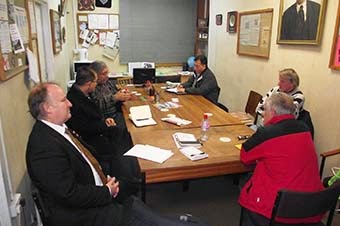
New Communist Party leader Andy Brooks welcomed comrades and friends to the Party Centre last week for the third in a series of seminars called by the NCP and the Juché Idea Study Group on Juché and Songun politics that are the basis of Korean-style socialism.
Kim Jong Il led the Workers Party of Korea for 17 years in overcoming natural disasters, imperialist blockade and the constant double-dealing and threats of war from the Americans. He worked tirelessly for the Party and the people of Democratic Korea till his last days in December 2011. Kim Jong Il told the world to “expect no change from me” after  great leader Kim Il Sung passed away and he went on to lead the strong and defiant socialist republic into the 21st century and the atomic age while developing the theoretical basis of Korean-style socialism.
Kim Jong Il made powerful contributions to the development of the Juché idea including Abuses of Socialism are Intolerable and Socialism is a Science, published in the early 1990s when whole sections of the international communist movement were wavering following the counter-revolutions in the Soviet Union and eastern Europe.
            And this was the theme of the joint mini-seminar held to discuss a key-note work by leader Kim Jong Un on Juché and Kim Jong Il’s immense contribution to the Korean communist movement.
It began with the screening of the DPRK documentary Admiration for Songun Politics that was followed openings from Dermot Hudson of the Juché Idea Study Group of England and John McLeod from the Socialist Labour Party on Kim Jong Un and Kim Jong Il’s works and its relevance to communists all over the world.
Everyone at the seminar had visited the DPRK and everyone shared their experience during the discussion which included memories of the historic World Federation of Youth and Students that was held in Pyongyang in July 1989 and a report on the recent meeting of the Korean Friendship Association in Belgium.
Today First Secretary Kim Jong Un is following the footsteps of those who came before him in striving to peacefully re-unify the Korean peninsula so brutally partitioned by US imperialism, strengthen the armed forces that are the ultimate guarantee of the independence and freedom of the people of Democratic Korea and ensure the health, education and well-being of every citizen in the DPRK. Still under constant threat from US imperialism and its lackeys it is even more important than ever to support the DPR Korea.

Thursday, 27 November 2014

Mass Rally of North Koreans against U.N. Human Right report!

More rubbish at the United Nations

NOTHING illustrates the hypocrisy of imperialism better than the cynical use of the “human rights” gang at the United Nations to further imperialist attempts to isolate and sanction any country that stands in the way of the “new world order”.
This week the Democratic People’s Republic of Korea and the Islamic Republic of Iran were singled out for alleged human rights abuses based on a hate campaign directed by the Americans and based on the dubious reports of defectors and agents of imperialism.
Russia, People’s China and Cuba made a principled stand against this gross interference in the internal affairs of sovereign states. The imperialists mobilised their lackeys at the UN General Assembly to vote in favour of draft resolutions condemning the DPRK and Iran that will soon be referred to the UN Security Council. But those on the front-line against imperialism stood by Democratic Korea and Iran and an even larger number refused to be stampeded by the Americans and simply abstained.
Fewer than half of the 193 UN member-states on Tuesday upheld a resolution accusing Iran of serious violations of human rights. Seventy-eight countries, mainly Nato members and Israel, supported the resolution presented by Canada at the UN General Assembly Third Committee.
Thirty five states, including Russia, Belarus, Bolivia, Egypt, India, Iraq, Kazakhstan, China, the DPR Korea, Cuba and Lebanon, voted against the document. Another 69 countries abstained. Among them were Brazil, Jordan, Libya, Saudi Arabia and South Africa. The anti-DPRK resolution was passed with 111 votes in favour to 19 against and 55 abstentions.
UN General Assembly motions have no executive powers and they are routinely ignored when they go against the wishes of imperialism. Last month the General Assembly again voted overwhelmingly in favour of ending the blockade of Cuba by the United States. 188 countries voted in favour of the resolution and three abstentions, with only the United States and Israel voting against it.
Needless to say nothing came of it because the real power at the UN lies with the Security Council and the Big Five veto powers, which include Russia and China who will doubtless veto any attempt to impose new sanctions on Iran or the DPRK.
The leaders of the United States and the European Union of course have no real interest in human rights, which are abused every day in the heartlands of imperialism and by their lackeys and placemen who serve their interests across the world. The real purpose of this charade at the UN is to provide a “human rights” cover to justify imperialism’s hostile acts against anyone who stands in their way.
The imperialists want a puppet government in Ukraine as part of their plan to confront Russia. Iran’s efforts to develop its own independent nuclear energy resources threaten the imperialist monopoly on nuclear technology in the Third World. With the Arabs the imperialist motive is simply to control and plunder the vast oil reserves under their sands.
Palestinian Arabs have been waiting for over 60 years for their human rights to be recognised. The Iraqis, Libyans and Yugoslavs all fell prey to the imperialists who invaded their countries and overthrew their governments in the name of “human rights”. And the Syrians and the anti-fascist partisans in Novorossiya see today the duplicity of the imperialists and their apologists, who ignore their plight and elevate the rights of their reactionary and barbarous enemies.
Human rights are routinely abused in the neo-colonies ruled by feudal tyrants and petty dictators that do the bidding of Washington, London, Paris and Berlin for a share of the cut.
Human rights count for nothing in the metropolitan heartlands where workers live in abject poverty while millionaires flaunt their wealth like a badge of honour. The imperialists are the real abusers of human rights. They are the enemies of the entire human race.

New Worker editorial
21st November 2014

Monday, 24 November 2014

Building support for the DPRK


By New Worker correspondent

Theo Russell, Dermot Hudson and Alejandro


FRIENDS of the Korean revolution met last weekend to strengthen the worldwide movement in solidarity with Democratic Korea and build the Korean Friendship Association.
The biggest ever KFA international meeting took place in the Belgian city of La Louvière with delegations from all over Europe, Asia and the United States as well UK KFA official delegate Dermot Hudson and communications secretary Theo Russell.
Also present were Hyon Hak Bong, DPRK Ambassador to Britain and two delegates from the Committee for Cultural Relations with Foreign Countries, Director Ryu Kyong Il, and Kang Hyon Gyu, liaison officer in Pyongyang.
The meeting was opened by KFA president Alejandro Cao de Benos, who said that the period 15th November to 17th December has been declared a special period of mourning marking three years since the passing of dear leader comrade Kim Jong Il.
Describing General Kim Jong Il as “a modern revolutionary hero”, Alejandro recalled that his last instruction was to recommend dear respected Marshal Kim Jong Un as his successor, and said: “Anyone who tries to undermine the way of life of our great motherland will follow the same fate as the traitor Jang Song Thaek.”
Alejandro declared: “The most repressive system and violation of human rights is the capitalist system, which is a tool for the oppression of one class by another.”
He also spoke of the imminent launch of a new “hyper-coal engine” developed by engineers from Democratic Korea and Europe, using converted coal as a cheap and cleaner fuel for vehicles and in electricity production.
KFA International Commissar Trever Artiz Hill noted: “More and more defectors from Democratic Korea are returning home and asking for forgiveness when they see that housing, health and education are human rights and not an expensive luxury. The real concern of the DPRK’s enemies is a socialist system, which is an alternative to their system, and this really frightens them.”
Ryu Kyong Il said: “For 14 years the KFA has helped the Korean people with their socialist construction, and now the Korean people are creating new miracles and innovations at the new Korean speed under the leadership of dear respected Marshal Kim Jong Un.”
In a powerful speech ambassador Hyon said: “The DPRK’s enemies have cooked up the human rights issue because they failed over the nuclear issue. Because the DPRK is guided by the Juché Idea, which stipulates that man is the master, there are no such thing as human rights violations in the DPRK.”
He said that in meetings with European Union officials they asked about the DPRK’s response to a planned UN Human Rights Committee resolution on the DPRK, and warned: “There will be a strong reaction from the DPRK.
“The final victory will belong to the Korean people. In conclusion, I hope that the KFA will redouble its solidarity and increase its actions in support of the DPRK.”
Among the many speeches from delegates Lukas Mrozek, head of the Polish KFA, said Poland was one of the first countries to recognise the young DPRK, and recalled that great leader President Kim Il Sung had visited his country twice and that Poland had welcomed children from Democratic Korea during the Korean war.
Mikel Vivanko of the Spanish KFA spoke of the tremendously positive experience of the opening of a DPRK embassy in Madrid and said KFA comrades and their Korean counterparts had celebrated the Day of the Sun together.
Messages were also received from Bangladesh, Brazil, Norway and Switzerland.
In his closing remarks Alejandro Cao de Benos said that there is currently an upsurge in interest in the KFA in Latin America, especially in Chile, Bolivia, Costa Rica, Argentina and Venezuela, and that a special meeting is planned for the 15th anniversary of the foundation of the KFA in 2015.
The meeting adopted a letter to the dear respected leader Marshal Kim Jong Un and presented a gift to be delivered him, and awards were made to KFA official delegates and activists.
The British delegation held meetings with Alejandro Cao De Benos and it was agreed the KFA in Britain would press ahead with the setting up regional branches and appointing Zone Delegates.
It was a great meeting marked by dynamism and vibrancy which the British KFA will strive to translate into real successes in building support for socialist Korea.

Saturday, 22 November 2014

Tuesday, 11 November 2014

Korean artists come to London


David Heather speaking with the DPRK ambassador 

 by New Worker correspondent
FOUR top DPRK painters have spent the past two weeks touring London, capturing glimpses of the spirit of the people in their art which was displayed for the first time at an exhibition at the DPRK embassy this week.
The Korean people’s artists painted their way round the capital, visiting the South Bank, the National Gallery, Covent Garden and the Tower and their impressions, along with many other examples of their skills have been delighting art-lovers and friends of the DPRK all week.
            The artists work at the Mansudae Art Studio in Pyongyang. The studio, which was founded in 1959, is the national fine arts centre of the DPR Korea with specialised units covering sculpture, ceramics, murals, paintings, embroidery and social and political posters. The studio employs nearly 5,000 workers including 700 artists whose works have been displayed throughout Democratic Korea and across the world.
Happy Day
 The vast majority of the major art works of the DPRK have been produced by Mansudae Art Studio artists. Their ages go from mid-20s to mid-60s and almost all are graduates of the very demanding Pyongyang University. Over half the Merit Artists and the People’s Artists, the two highest awards an artist can receive in DPRK, are or have been associated with the Mansudae Art Studio.
Traditionally Koreans painted in ink and it remains the most popular genre in the DPRK. Oil painting was introduced to Korea in the 19th century and for a long time it was seen as a foreign technique. But in the 1960s it was taken up by the Studio with the specific approval of great leader Kim Il Sung. It is now used mainly for landscapes, wild-life studies and portraits.
            At the launch on Monday the DPRK ambassador, Hyong Hak Bong, paid tribute to all those who made the exhibition possible including the Foreign Office, the British Council and the organiser, David Heather, a Surrey art dealer who has written a number of books on the posters of the German Democratic Republic, Vietnam and the DPRK.
The Ambassador said he hoped the exhibition would contribute greatly to cultural exchange between Britain and the DPRK.
            Communists and friends of Korea rubbed shoulders with art-dealers, art critics, diplomats and journalists at the reception for the exhibition in the main hall of the embassy in west London. Guests included New Communist Party leader Andy Brooks, Revolutionary Communist Party of Britain (Marxist-Leninist) general secretary Michael Chant, Dermot Hudson from the Korean Friendship Association and American Hip Hop artist and campaigner Marcel Cartier, who recently visited the DPRK.
                        The Mansudae artists had never been to London before and we saw London through the freshness of their eyes as they caught the autumn crowds in oil. These included a painting of a snapshot one of them took of two smiling teenage girls on the South Bank and the ceramic poppy installation at the Tower of London. It was also a first for many of the guests looking at examples of contemporary and traditional Korean painting, wood-cuts and sketches.
            Widely reported in the bourgeois press the exhibition was also covered by the BBC, ITN, Channel Four and Central China TV (CCTV).    Over 100 guests attended the launch and opening ceremony. Thousands are expected to come to the public exhibition which closes at the end of the week.